Patios & Stonework in Baltimore County
Paver and flagstone patios, walkways, steps and outdoor kitchens — built on a base that survives a Maryland winter.
Built from the base up.
Most patio failures in this part of Maryland are not the pavers. They are what is underneath. Our clay-heavy soil holds water, that water freezes and expands through winter, and a patio laid on a thin or poorly compacted base lifts, dips and opens up joints within a couple of seasons.
So we build the part you will never see properly. Excavate to depth, a compacted stone base laid in lifts rather than all at once, proper edge restraint so the field cannot creep outward, and pitch away from the house so water leaves rather than sits. The stone on top is the easy part.
- Compacted stone base, laid and compacted in lifts
- Edge restraint on every open edge
- Pitch set away from the foundation for drainage
- Polymeric jointing sand to slow weeds and washout
- Techo-Bloc and natural stone — you pick the material
Paver patios and walkways
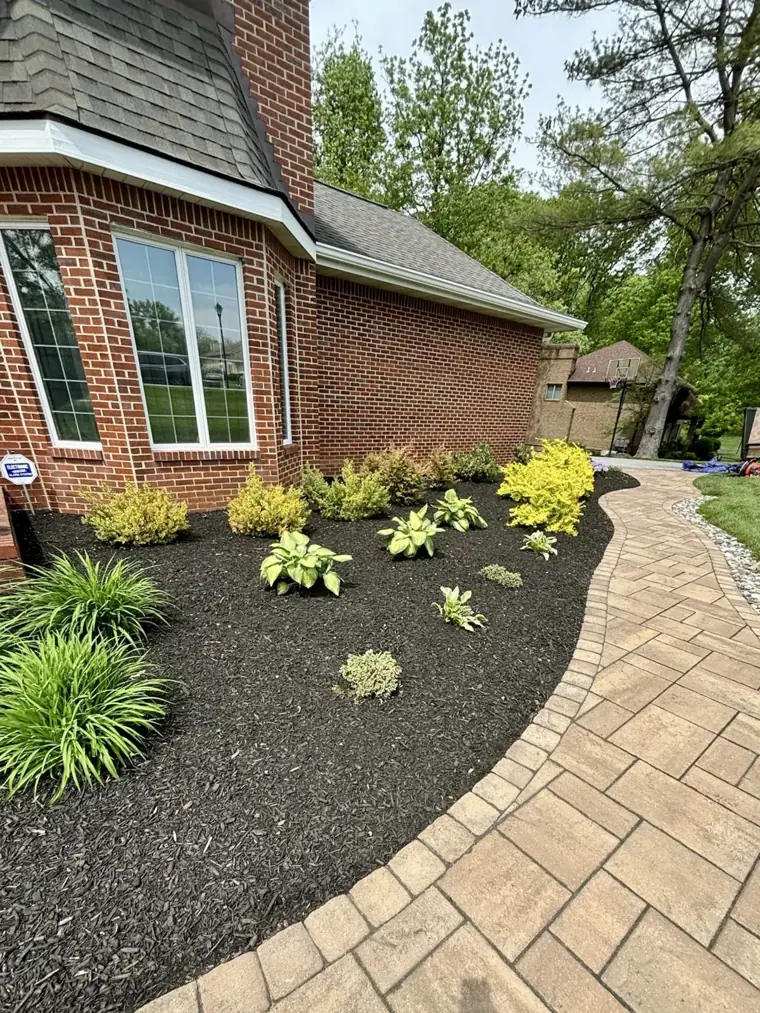
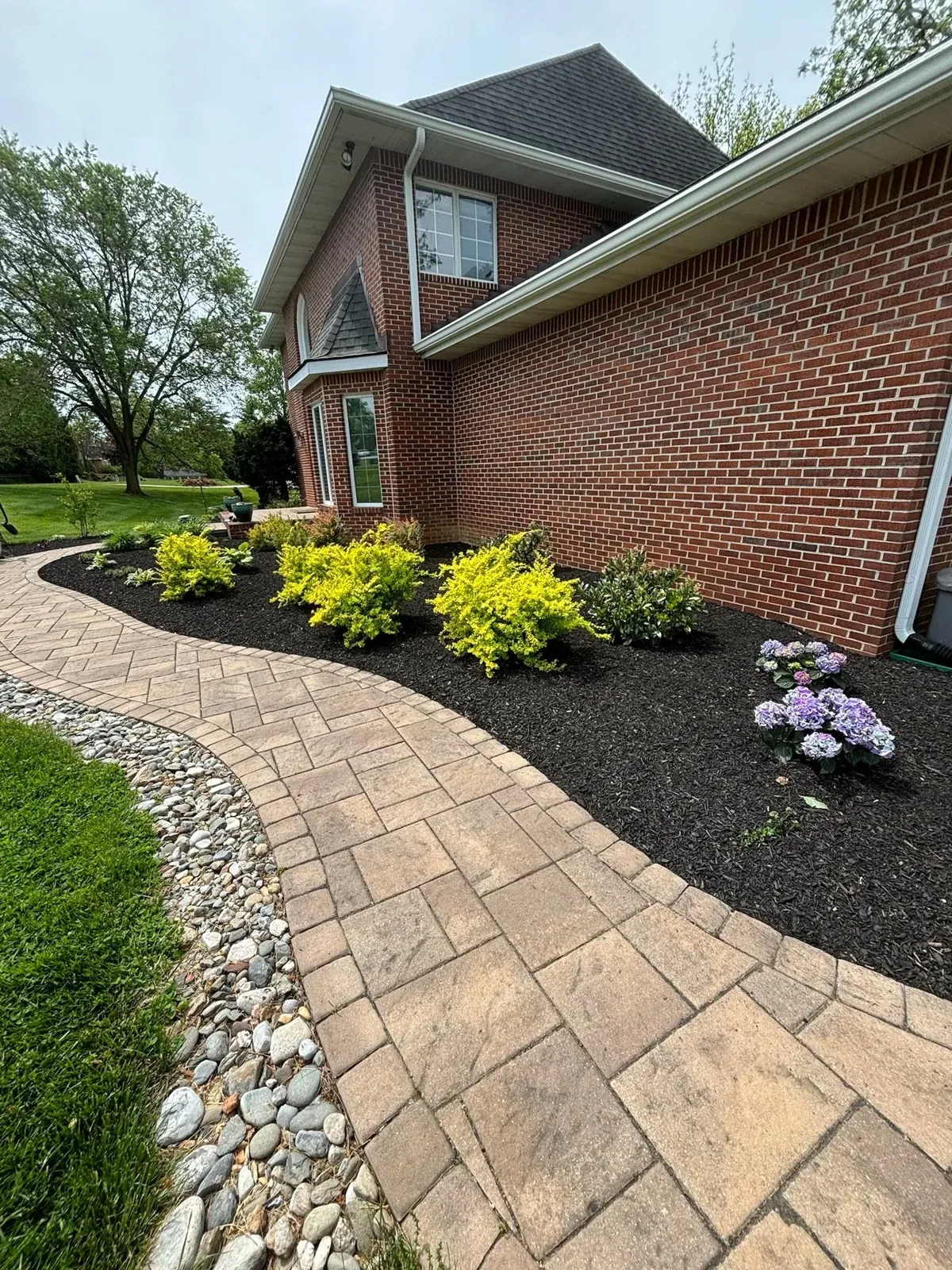
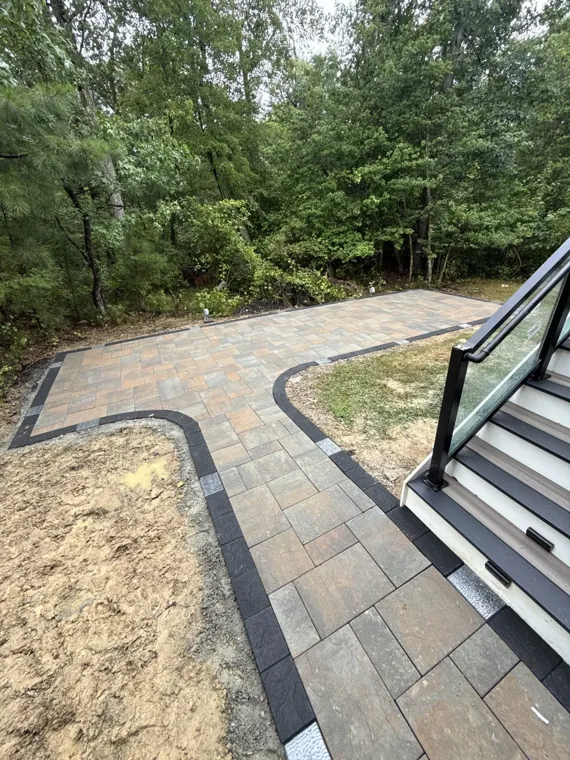
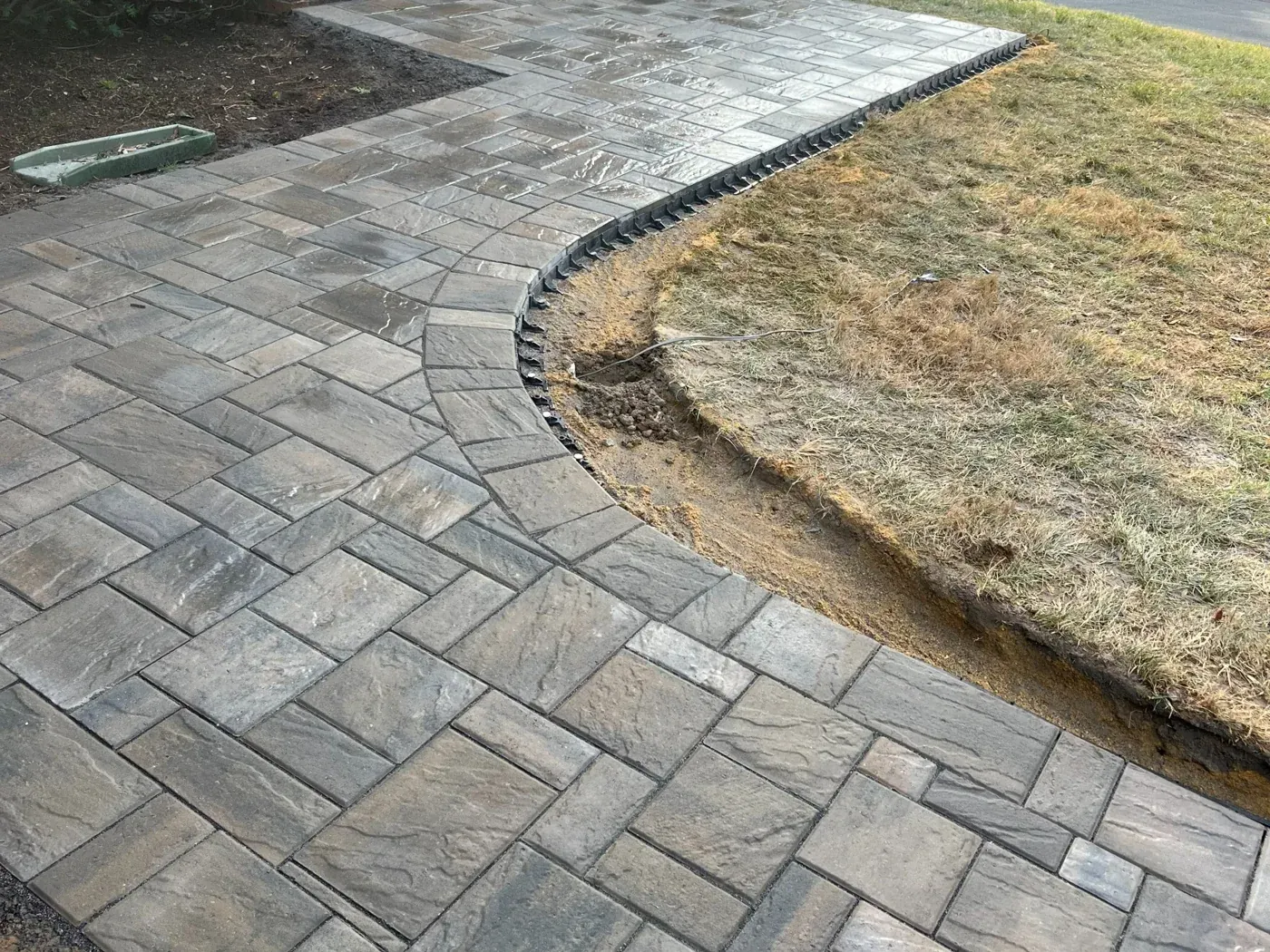
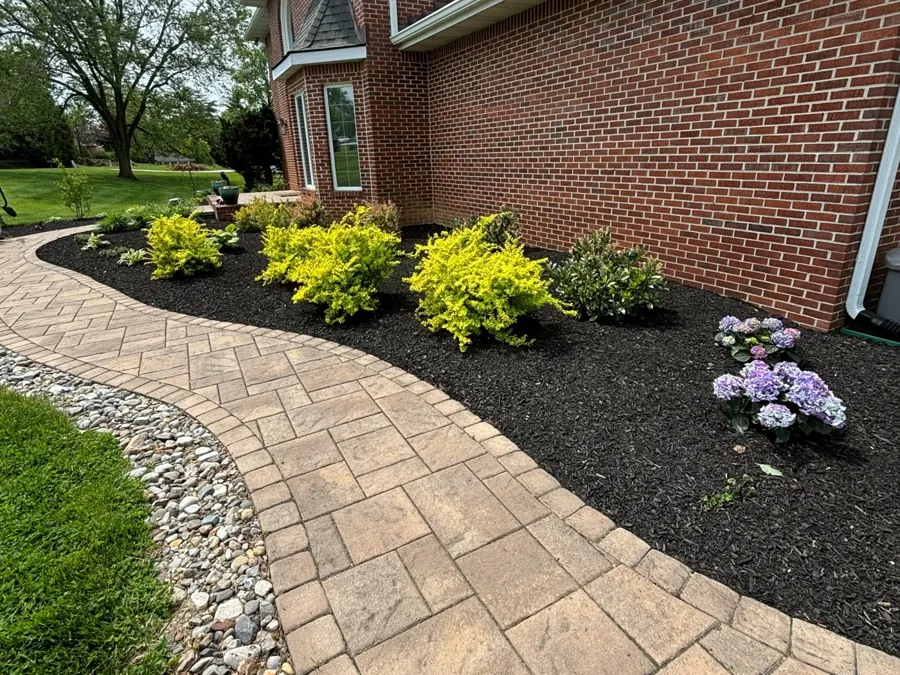
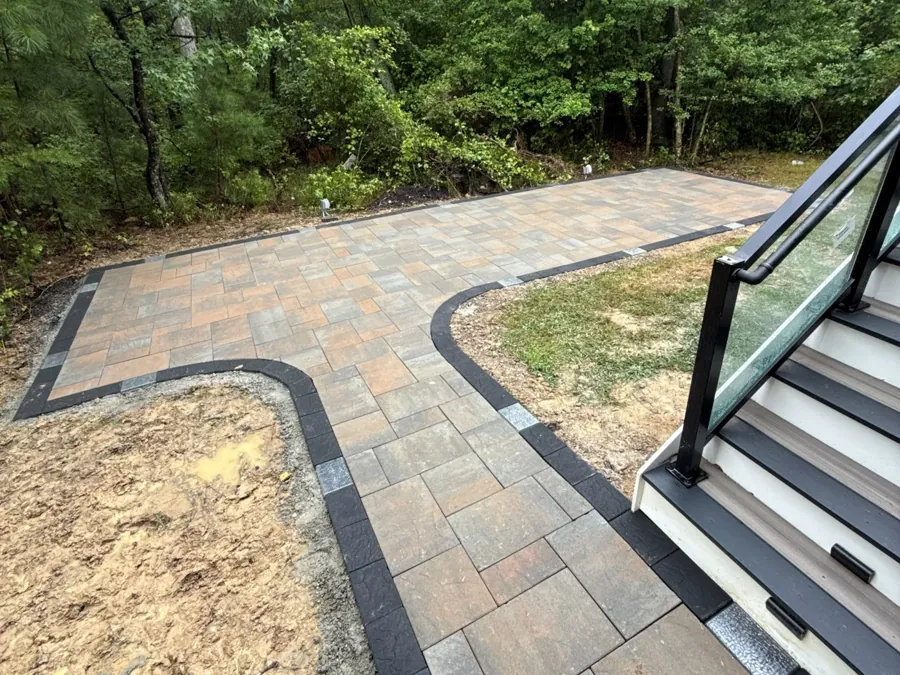
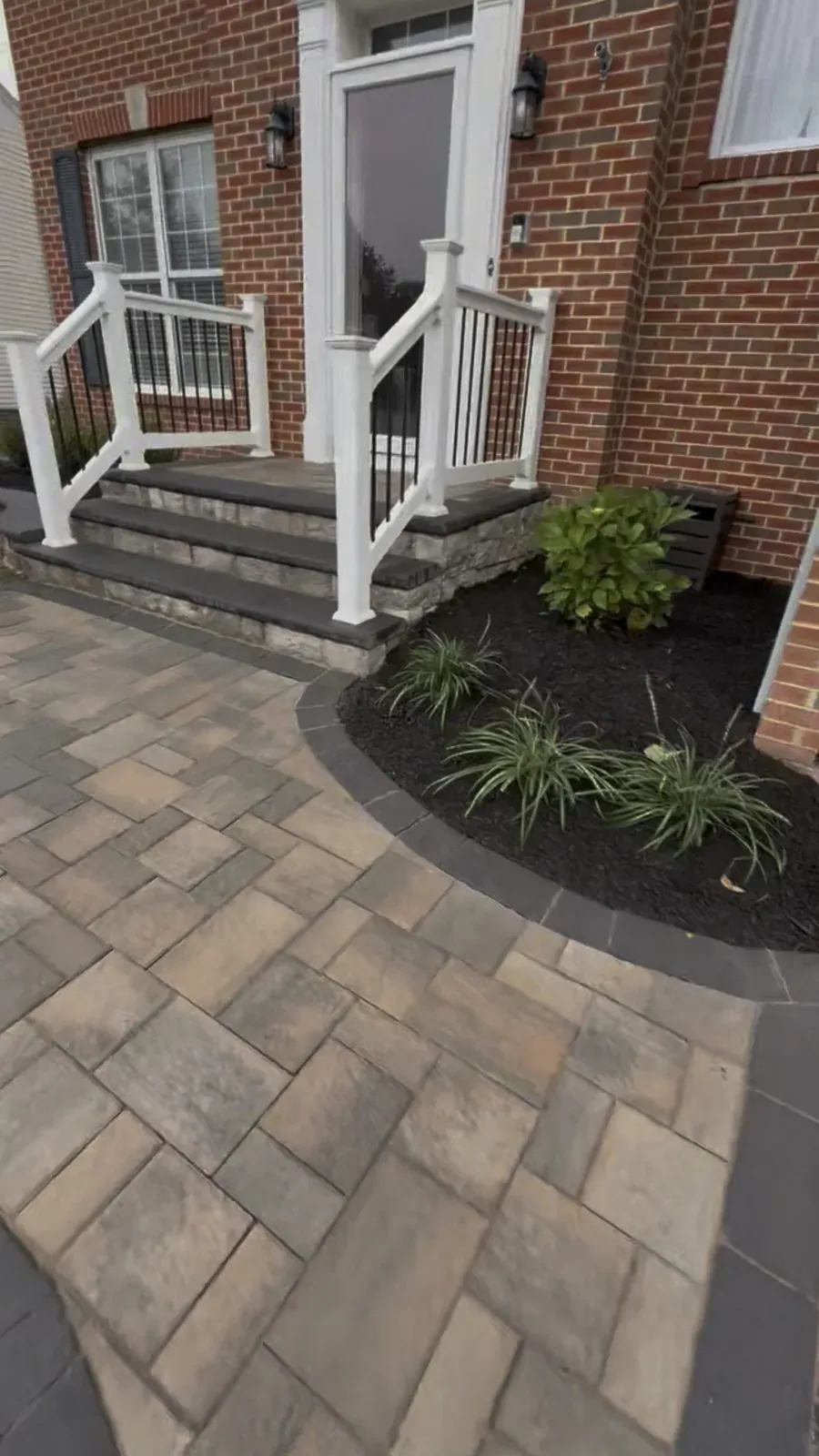
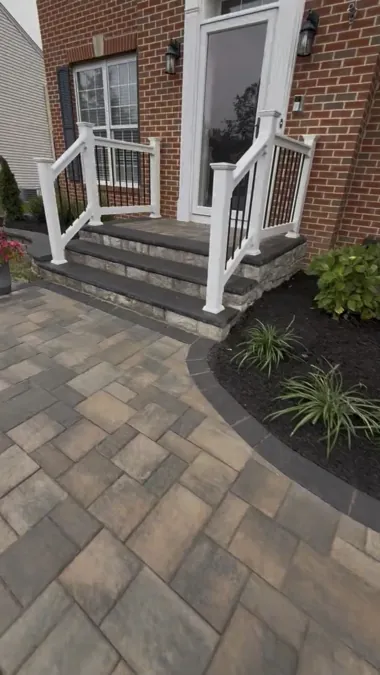
Manufactured pavers give you a consistent thickness, a huge range of colors and a repeatable pattern, which makes them the practical choice for larger areas and for anyone who wants a crisp, finished look. If a section is ever damaged you can lift and replace individual units rather than rebuilding the lot.
- Techo-Bloc and comparable manufacturer lines
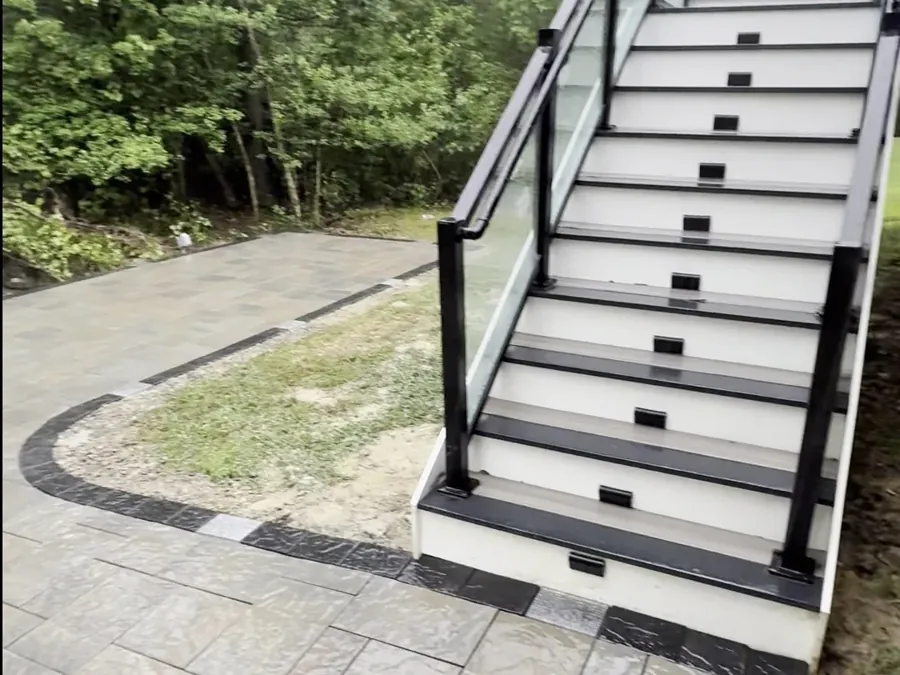
- Running bond, herringbone and soldier-course borders
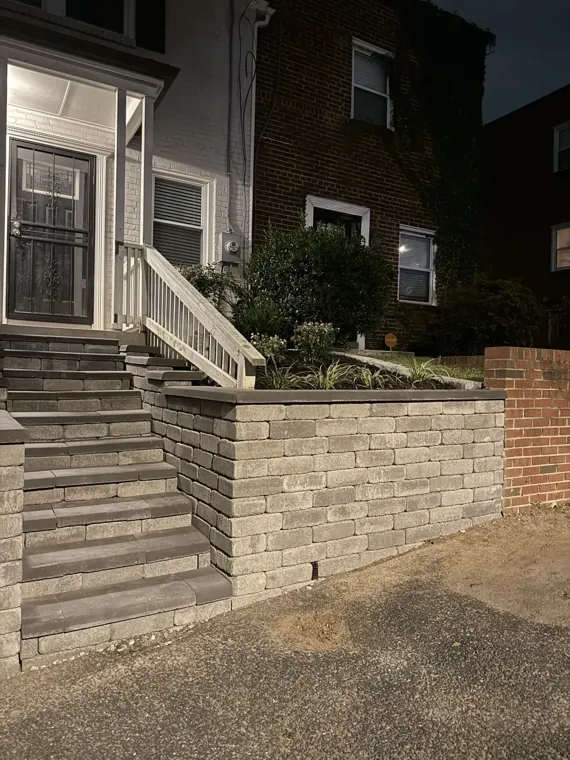
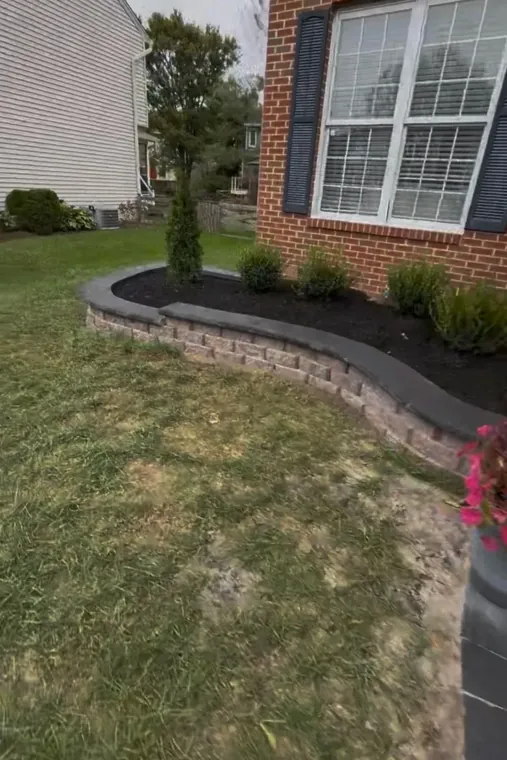
- Steps, seat walls and fire-pit surrounds built to match
Natural stone and flagstone
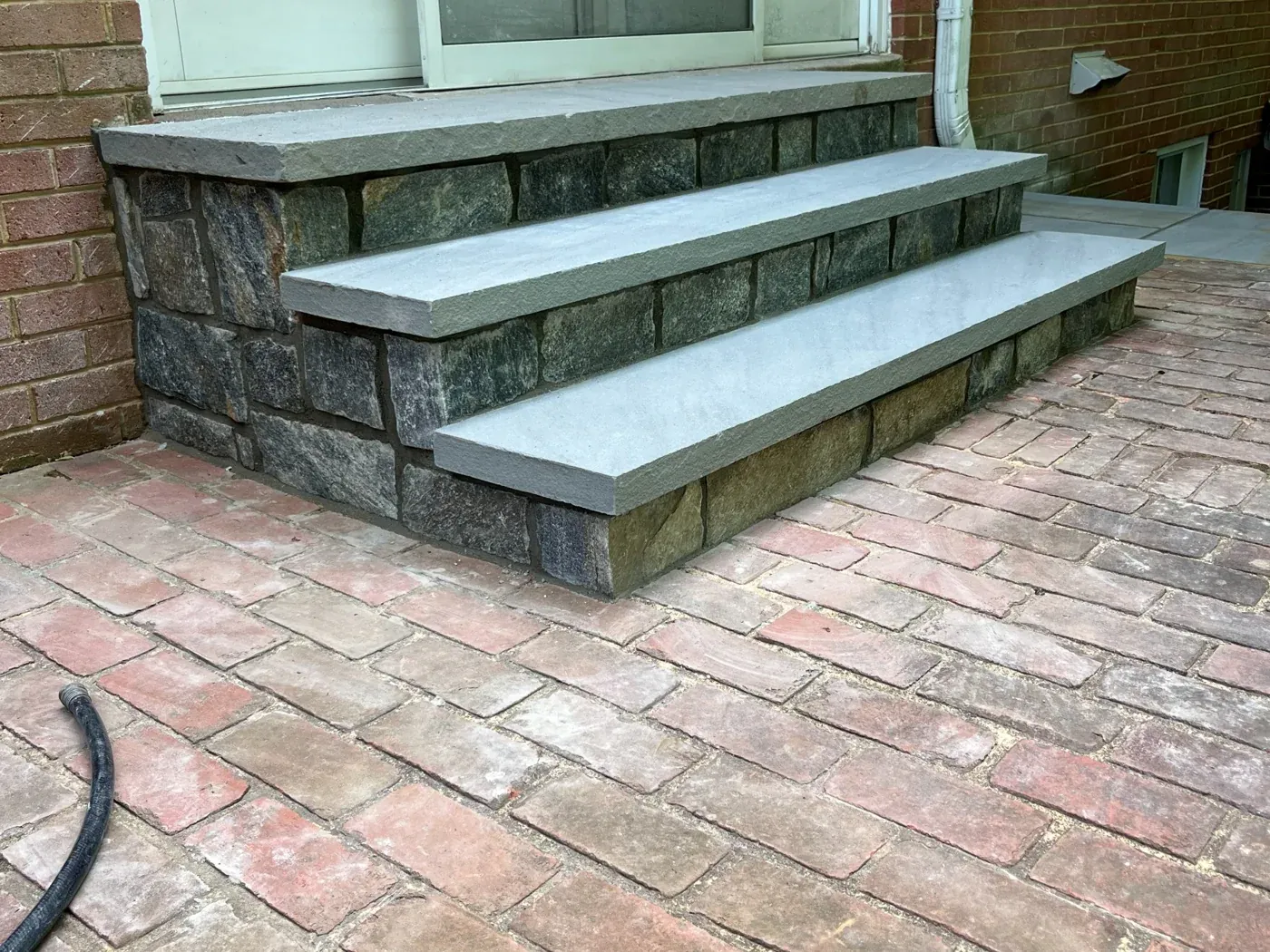
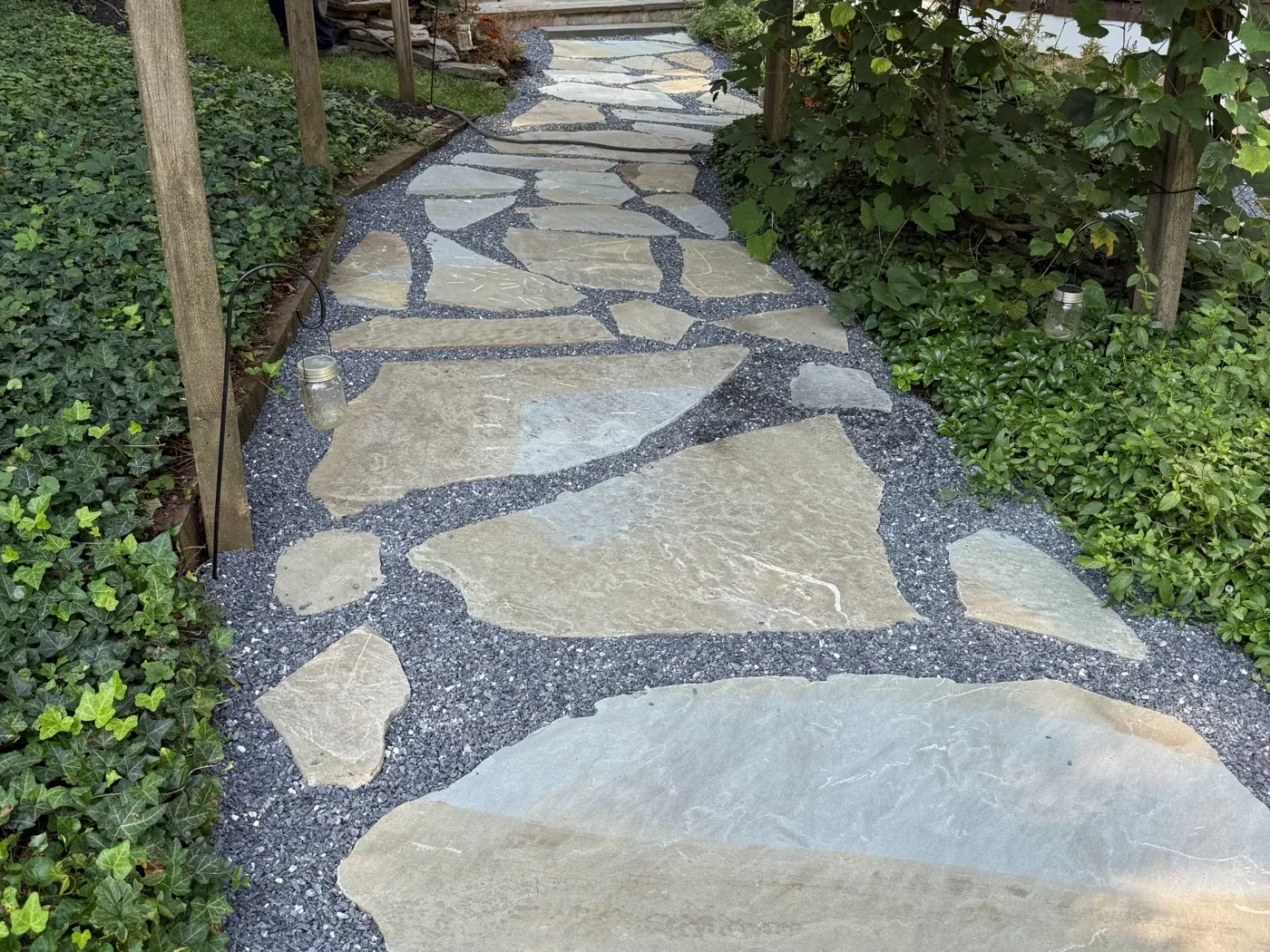
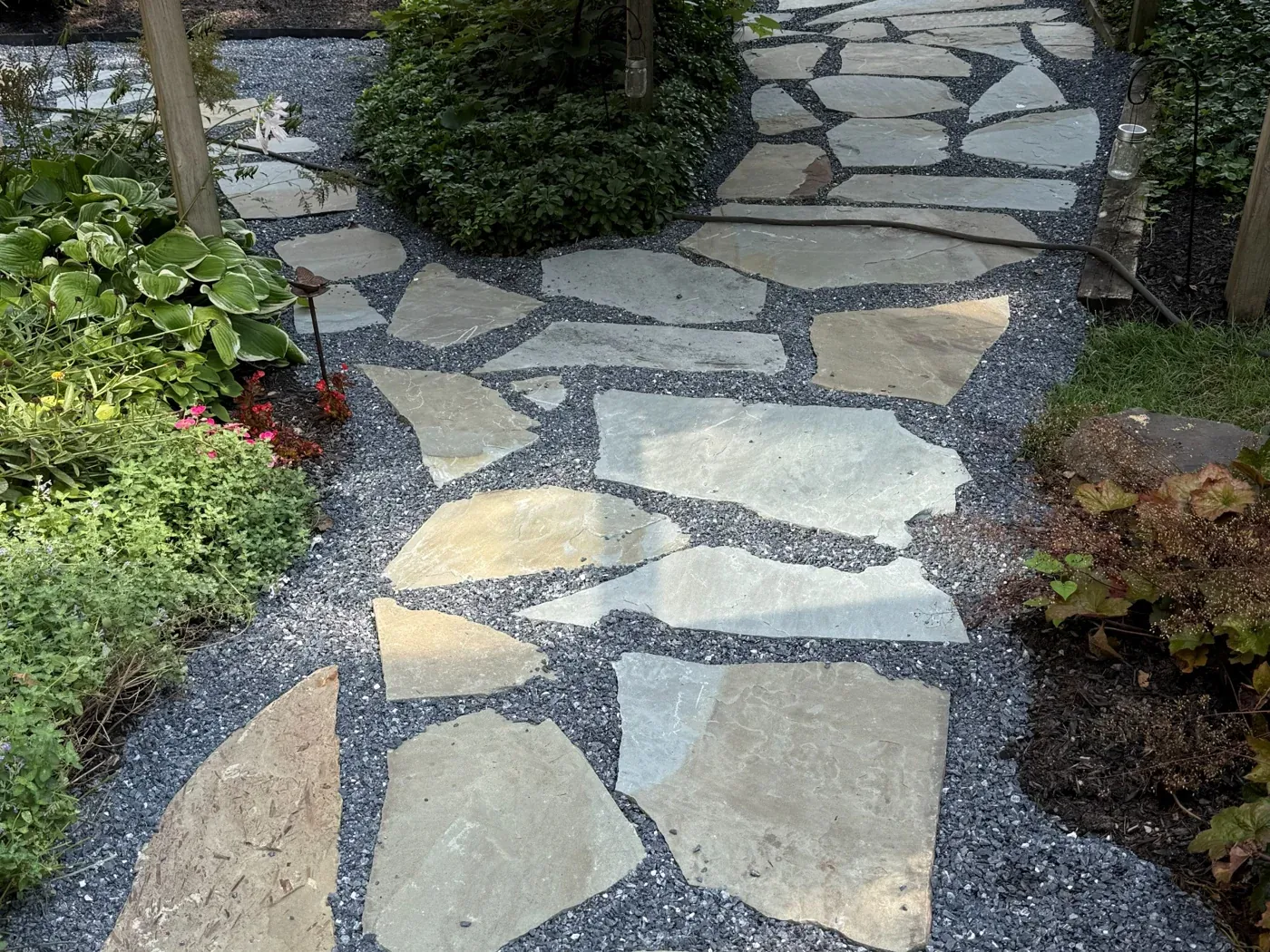
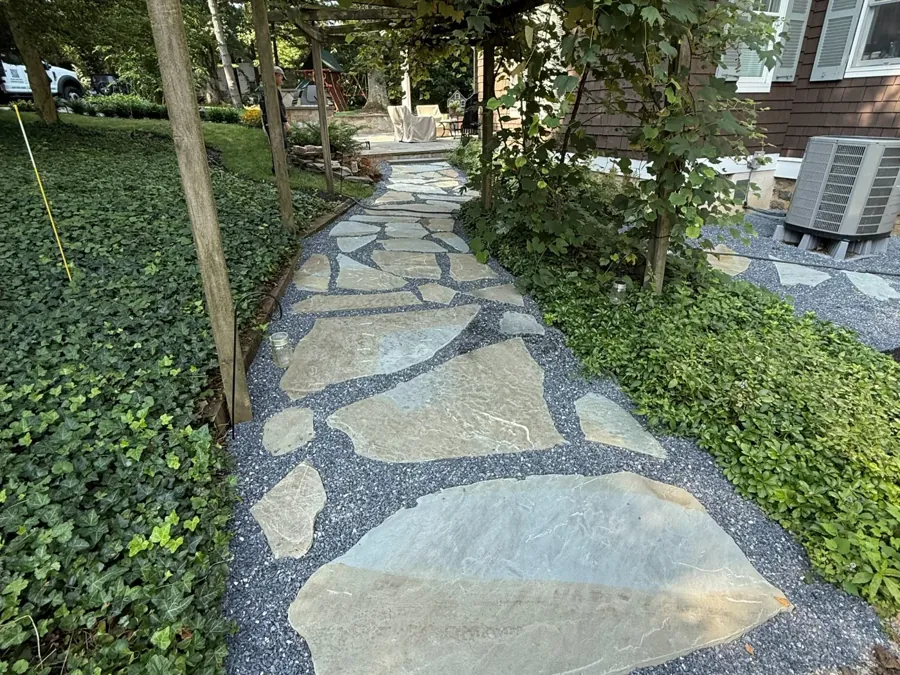
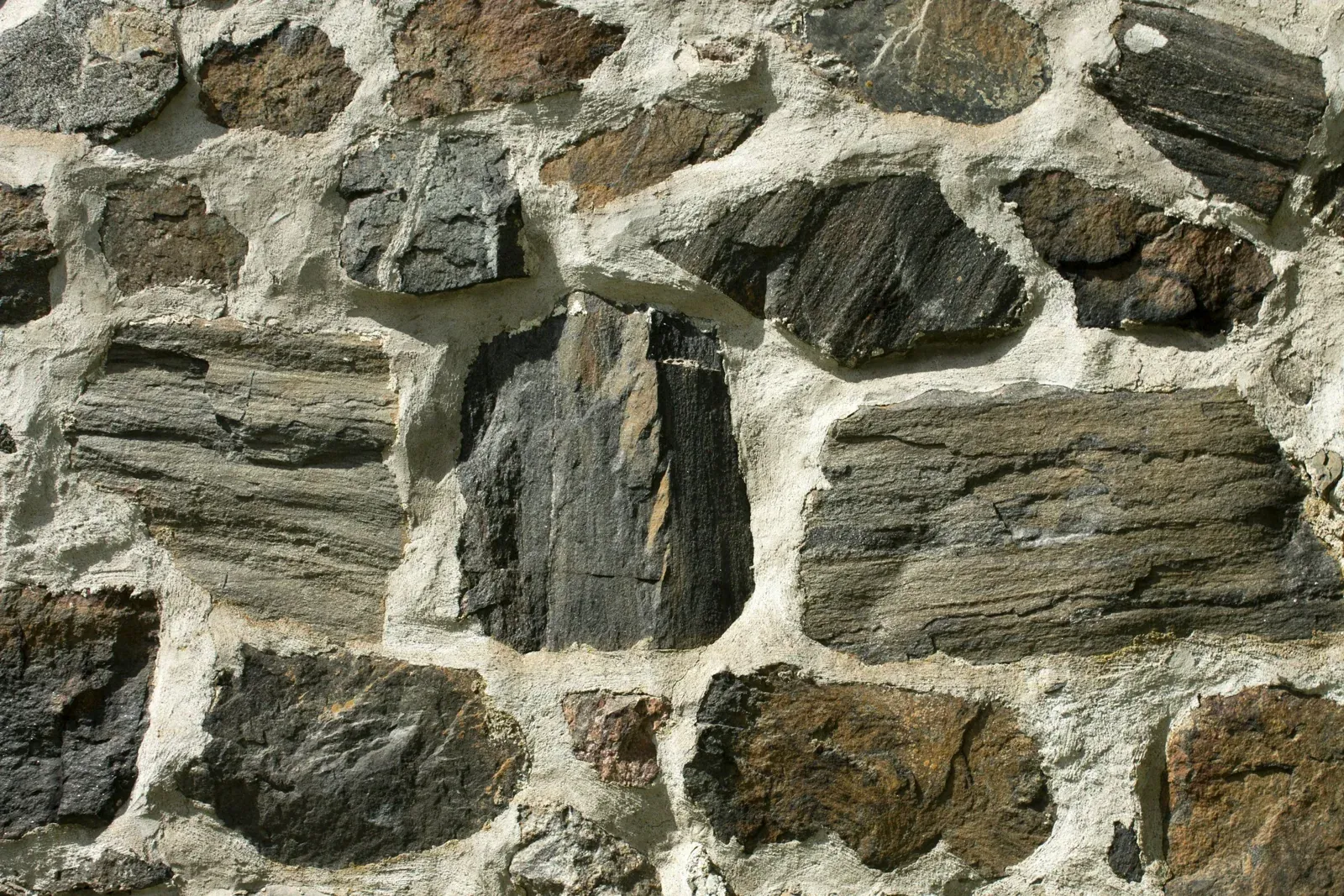
Natural stone is irregular by nature, so it takes longer to lay and costs more in labor — but nothing else looks like it, and on older Baltimore County homes it usually sits better against the existing masonry than a manufactured product does.
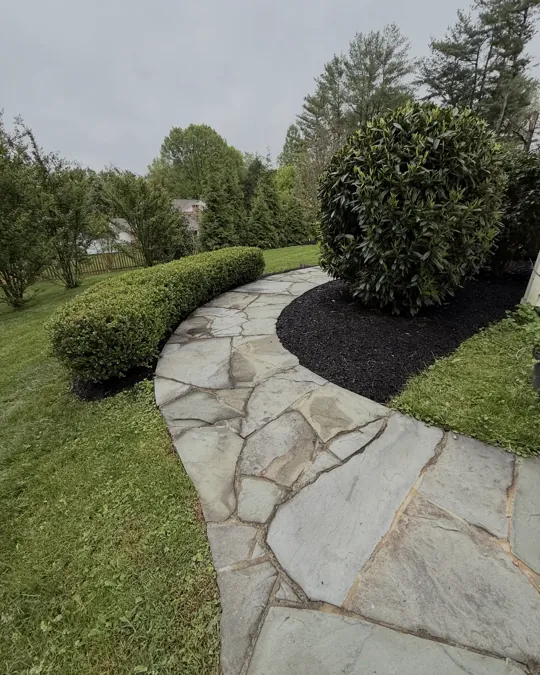
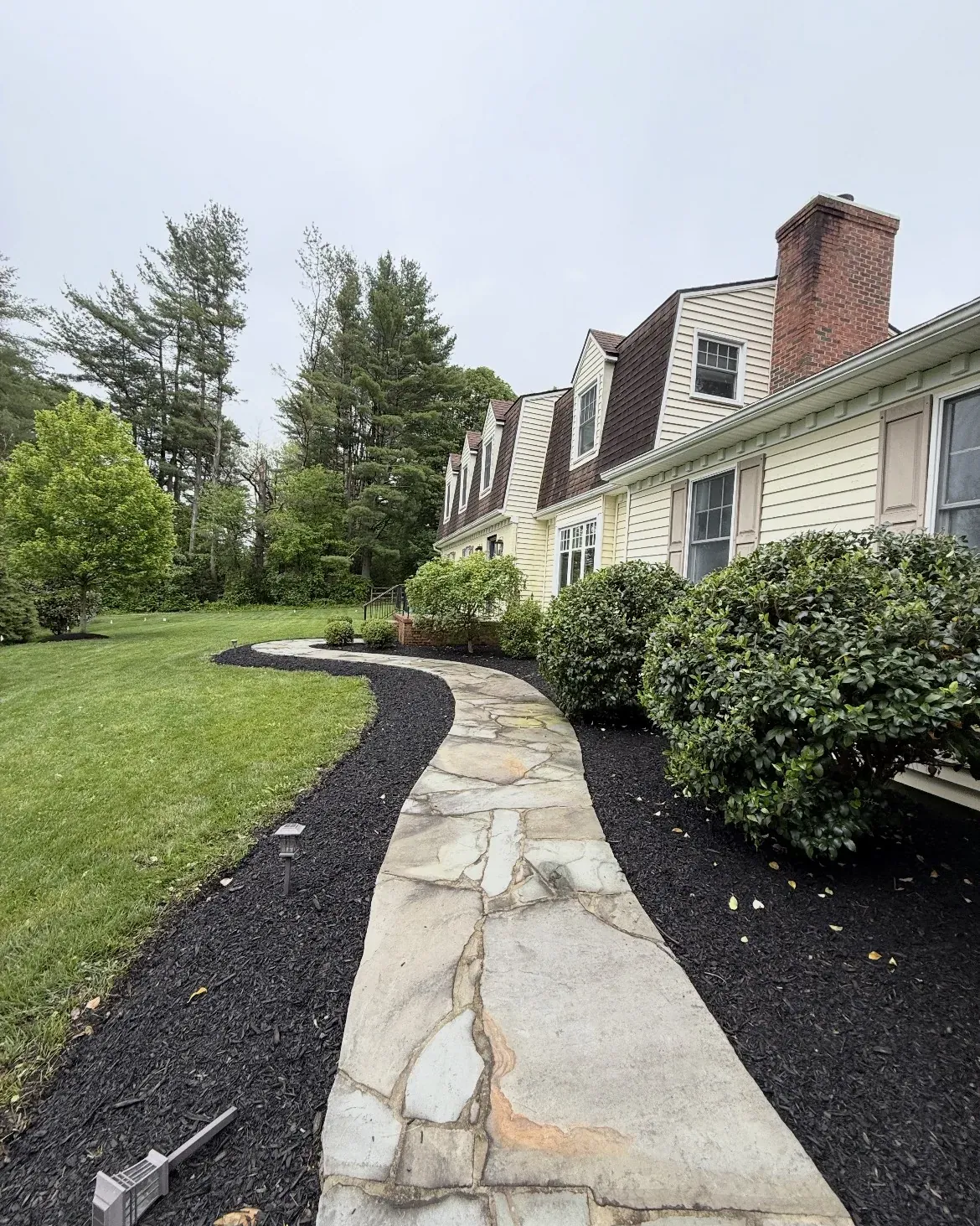
- Flagstone patios, treads and stepping paths
- Dry-laid or mortared, depending on the application
- Matched to existing stonework where there is any
Driveways, aprons and parking pads
Poured concrete where concrete is the right answer — a drive that has to carry a vehicle every day, an apron where the drive meets the street, a pad beside the garage. The work that decides whether it cracks is under it, not on it.
- Base depth and compaction set for the load, not the look
- Control joints cut where the slab wants to move anyway
- Fall taken away from the house, always
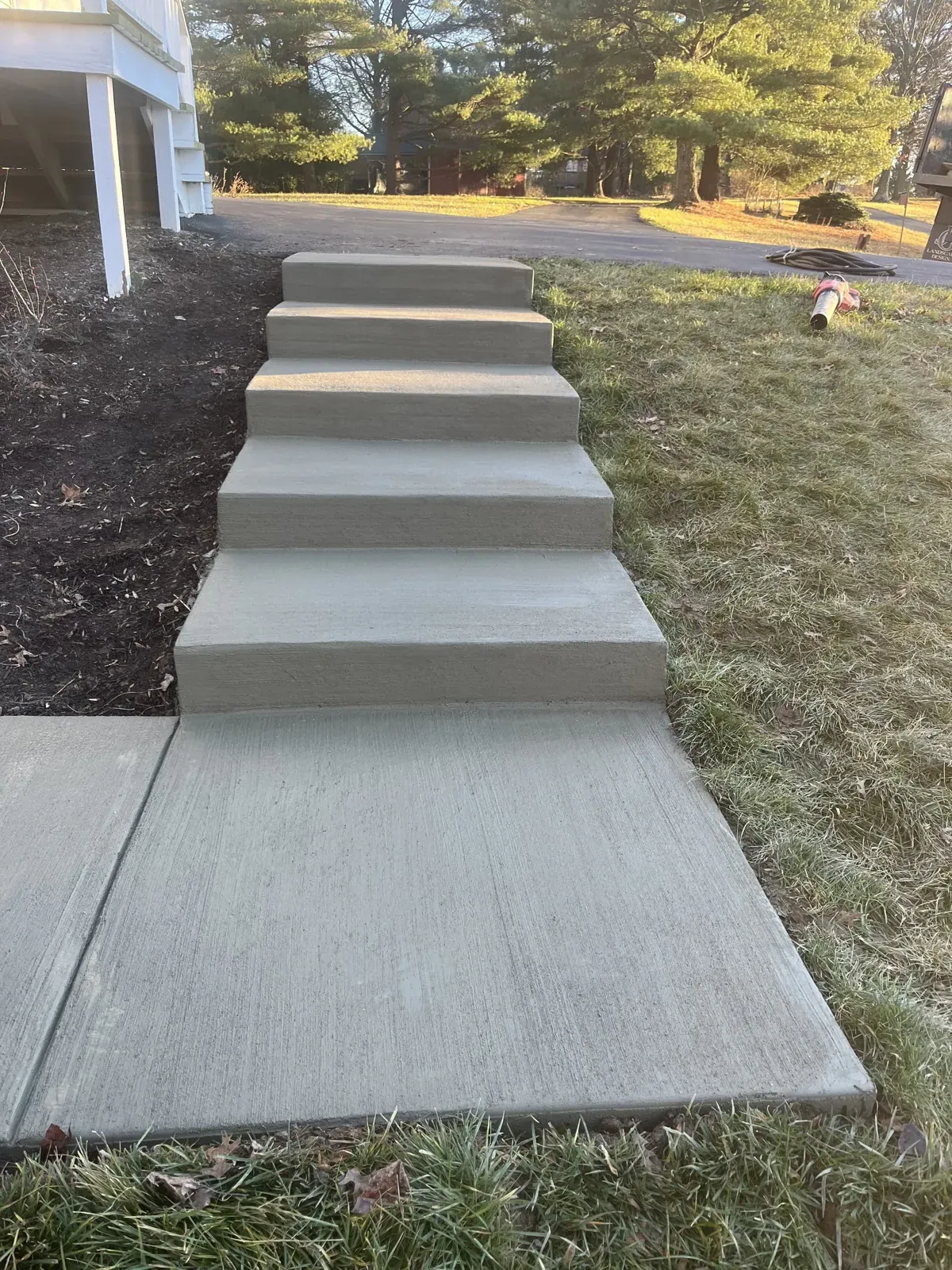
Concrete walks, steps and footings
Walks, steps and the footings that hold a wall up. Less glamorous than flagstone and just as unforgiving if the base is wrong.
- Steps set to an even rise so nobody trips on the odd one
- Footings below frost depth
- Surfaces finished for grip, not just for looks
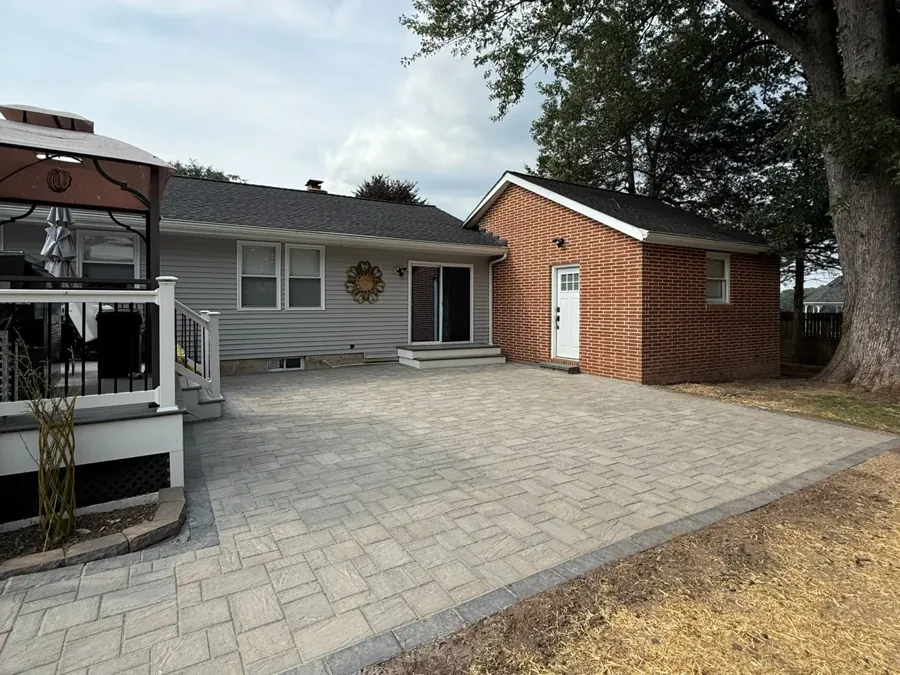
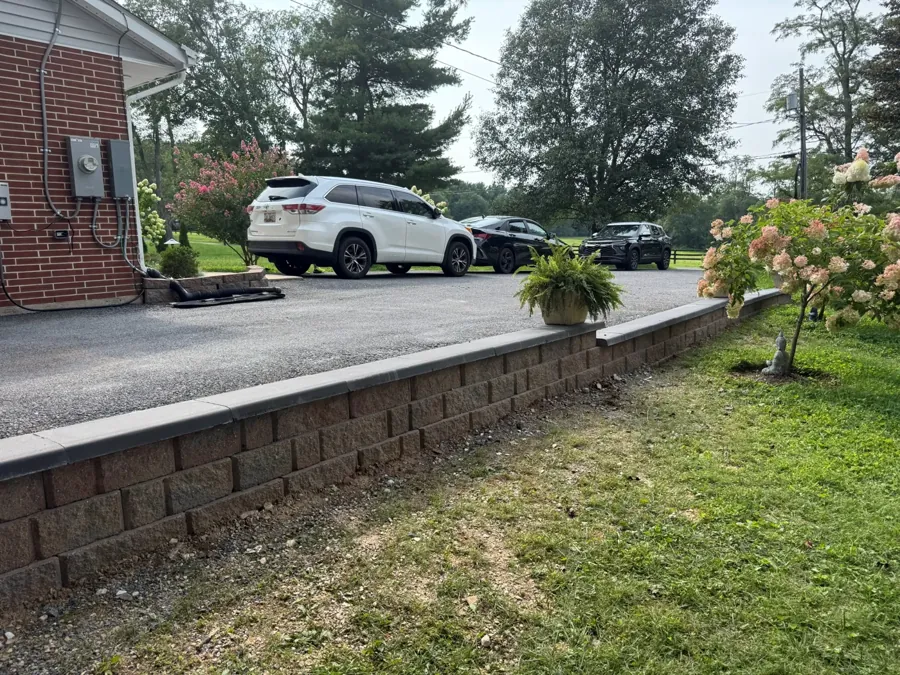
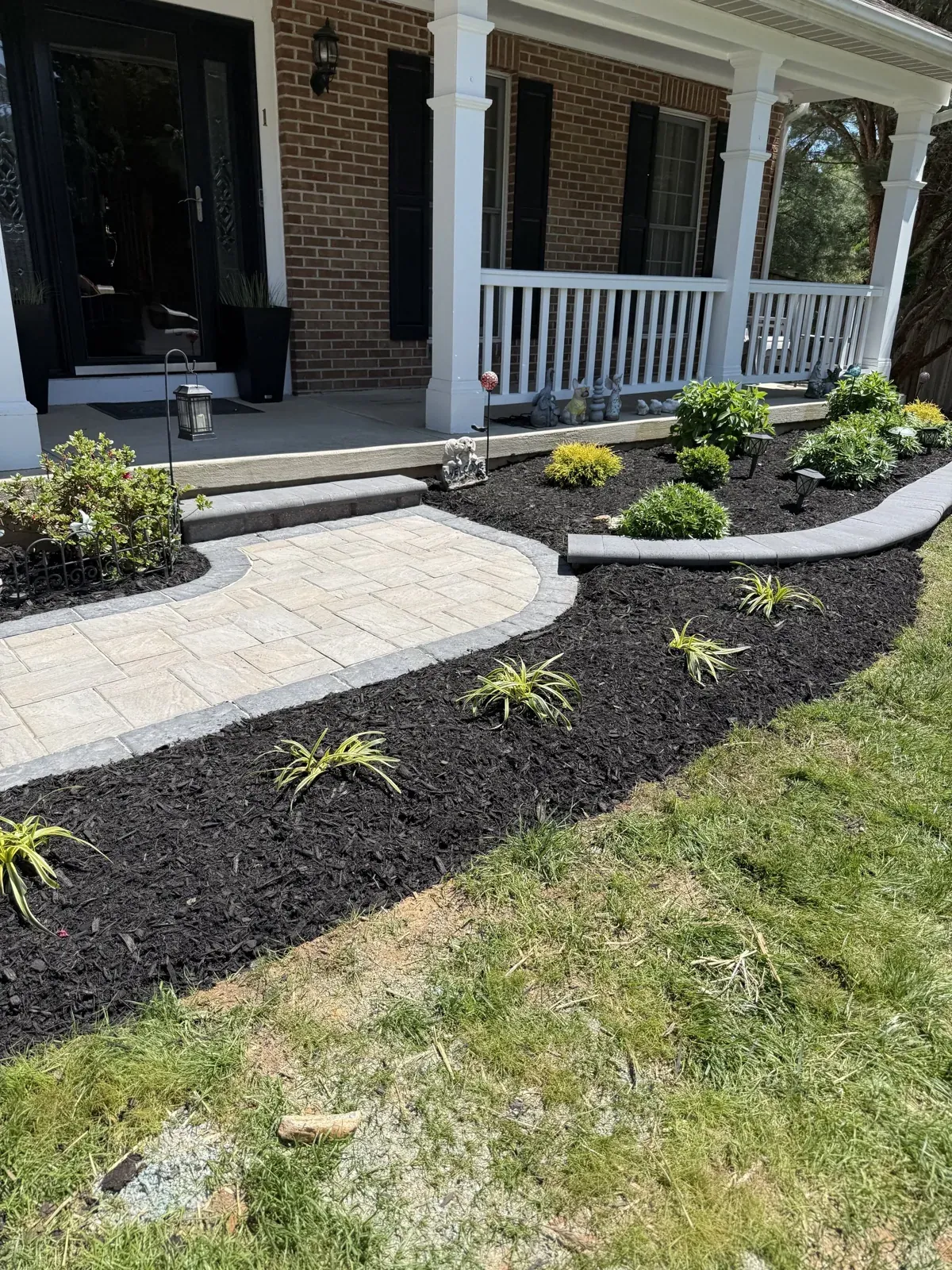
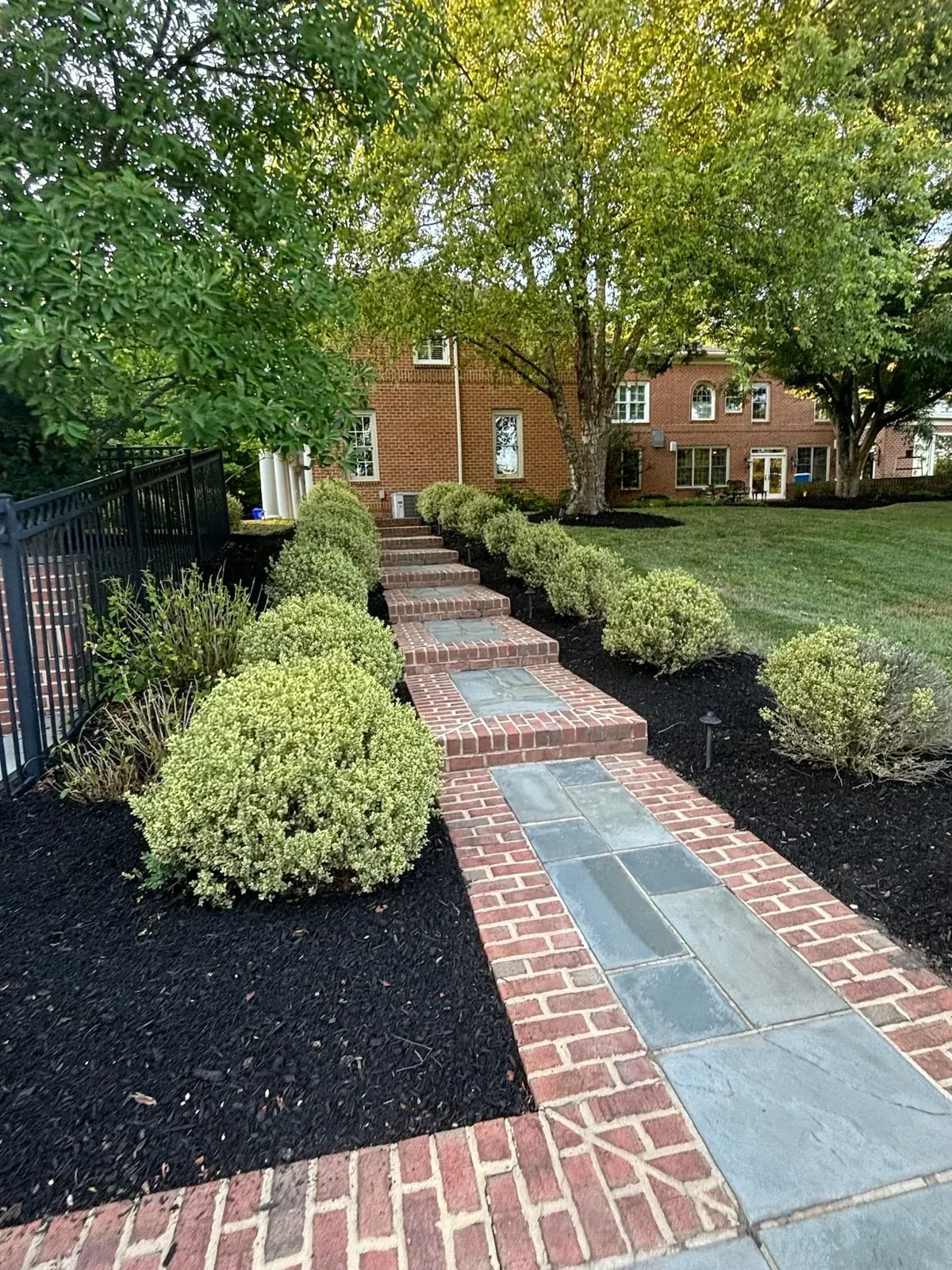
A look at the job.
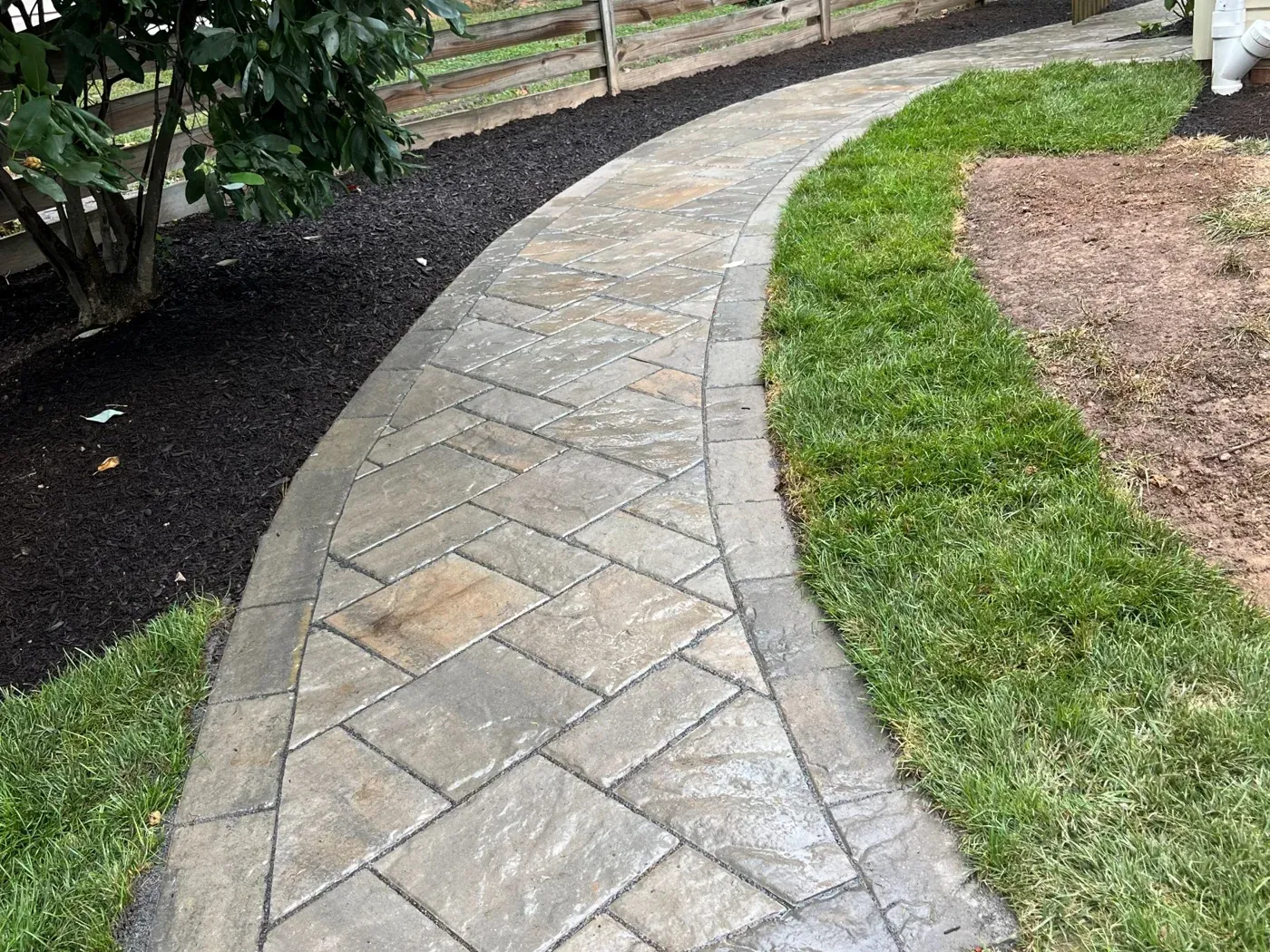
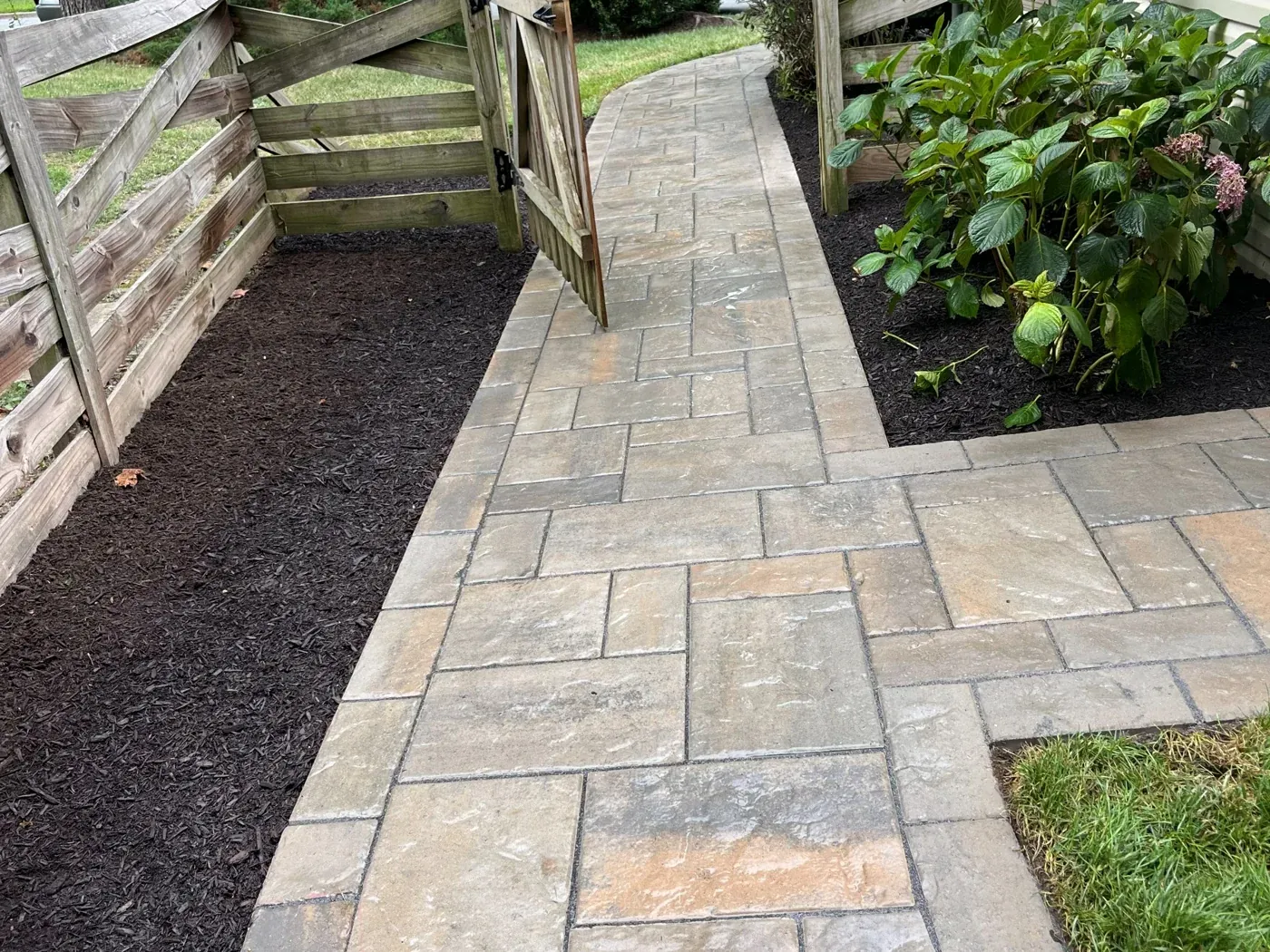
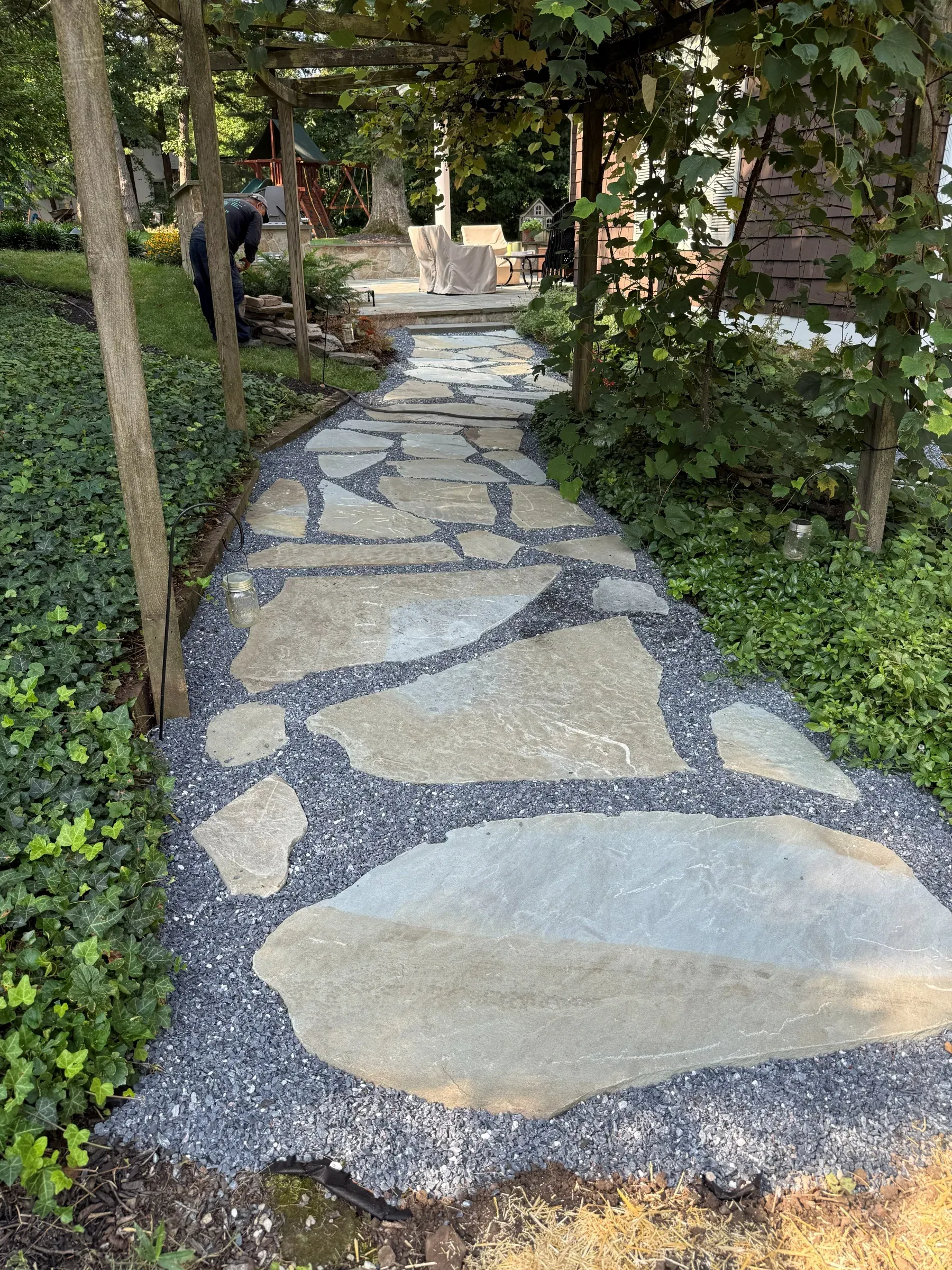
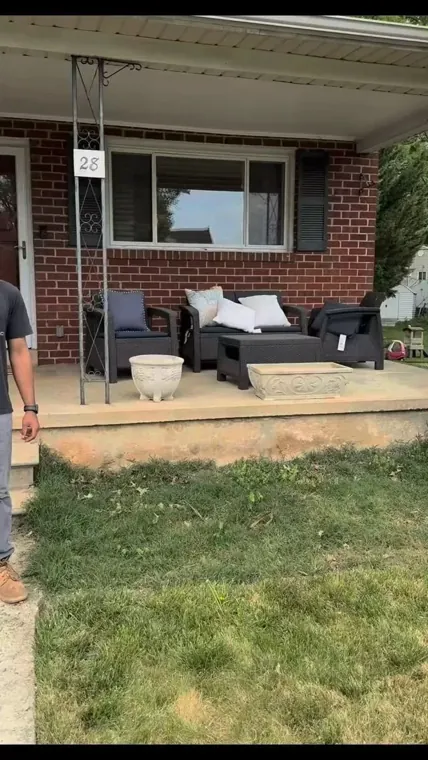
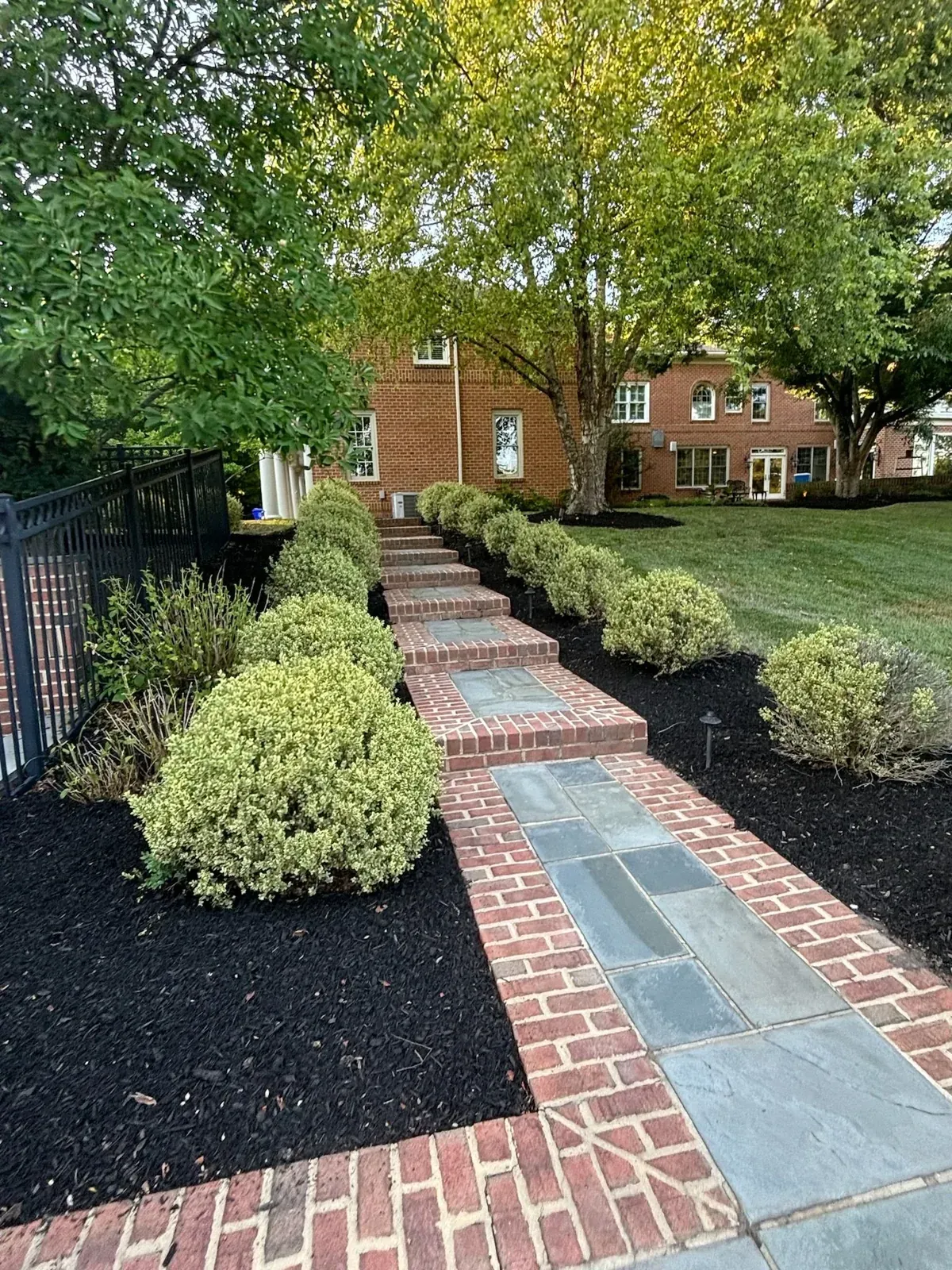
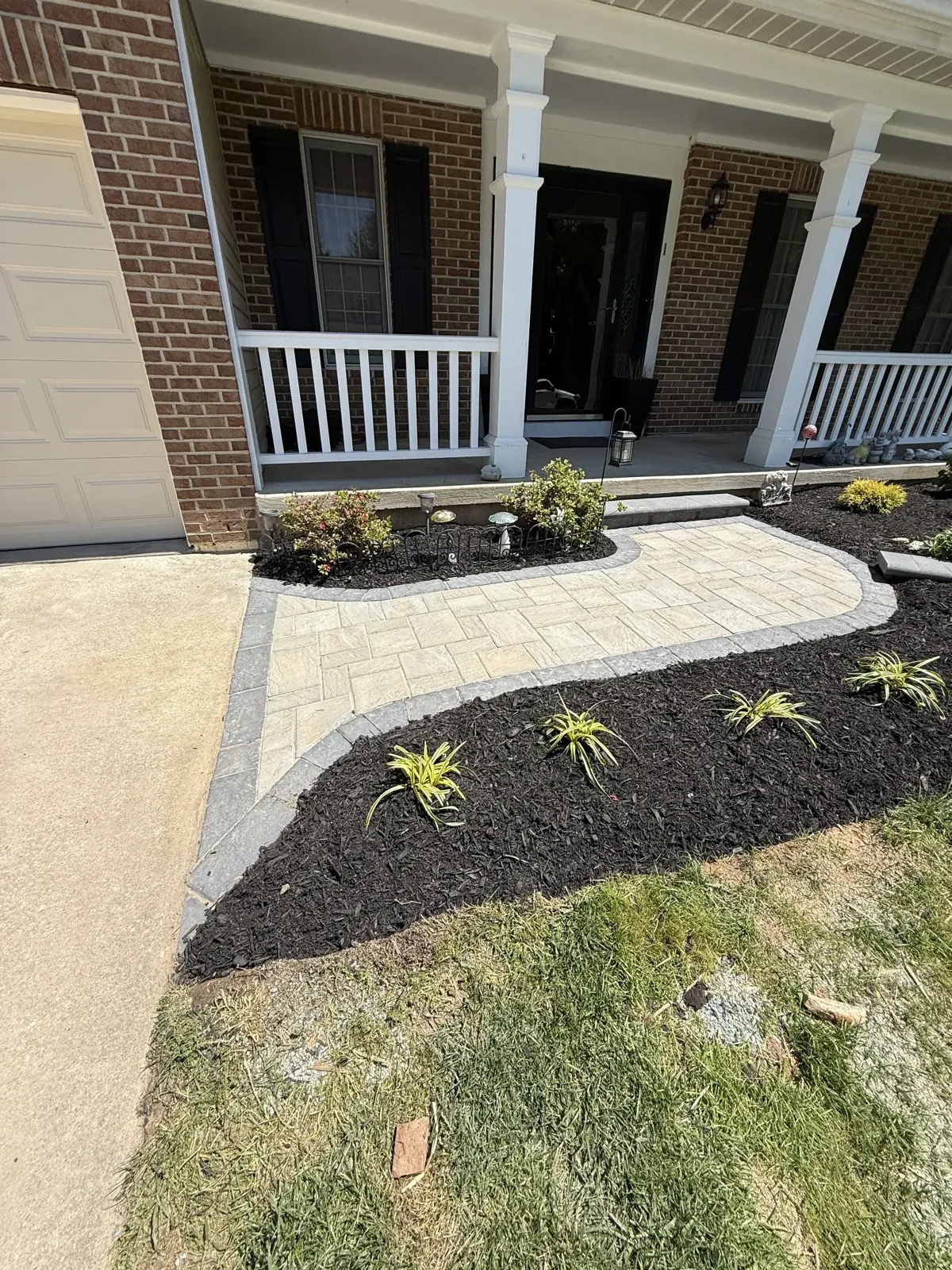
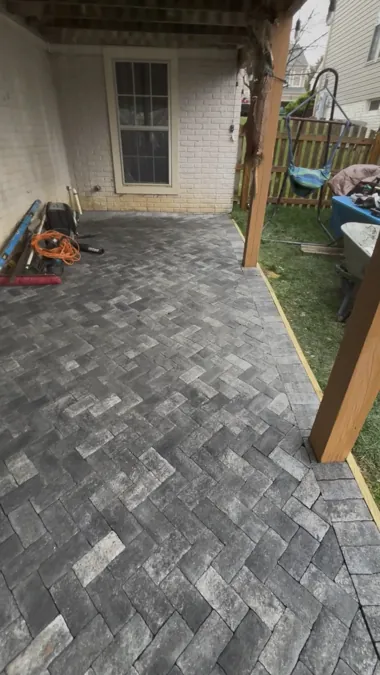
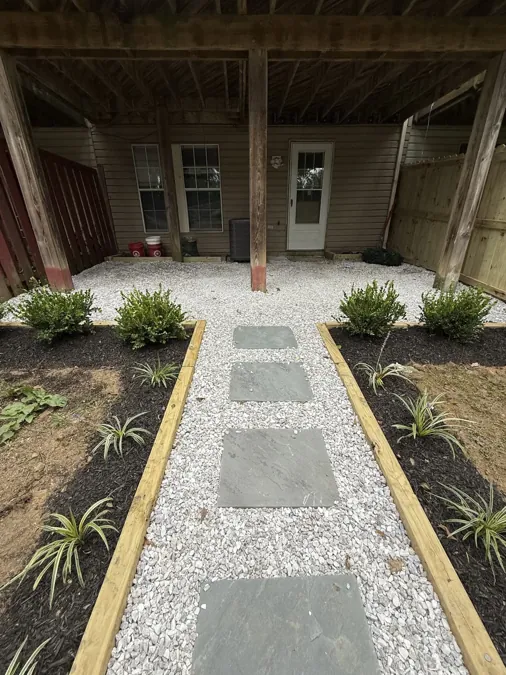
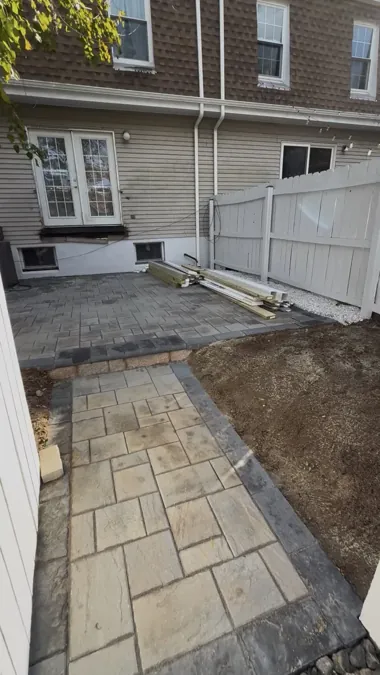
31 photographs from Jamatte patios & stonework jobs. Every one is our own work — no stock, no borrowed portfolio.
What decides the price
Size and shape
Square footage matters, but so does the outline. Curves and cuts take longer than straight runs.
Access
A back yard reachable only through a narrow side gate means everything moves by wheelbarrow. That is time.
Material
Manufactured pavers and natural stone sit at different price points, and so do the ranges within each.
Ground conditions
Slope, existing structures and how much has to come out before anything goes in.
How a patio actually gets built
The order matters more than any single step. Most of what goes wrong on this kind of work is a stage done out of sequence, or skipped because it is buried by the next one.
Mark out and call 811
Maryland law requires the Miss Utility call before excavation, it is free, and it needs at least two full business days’ notice - so it is also one of the real reasons a job cannot start tomorrow. The layout gets painted on the ground at the same time, so you can walk it and change your mind while changing it still costs nothing.
Excavate to subgrade
Dig depth is the finished height minus the paver, minus the bedding layer, minus the base. Get this wrong at the start and the patio finishes proud of the door threshold or below the lawn, and neither is fixable later.
Compact the subgrade, then separate it
The soil under the base is compacted before anything goes on it. Over soft or clay-heavy subgrade a geotextile separates base from soil, which is what stops the stone slowly disappearing down into the clay over several wet winters.
Base in lifts, not one dump
Crushed stone goes down in shallow layers and each one is compacted before the next. A single thick lift compacts on top and stays loose underneath, and that loose layer is what becomes a dip two summers later.
Screed the bedding layer
A thin, even bedding course is screeded flat and then left alone. It is not a leveling layer, and using it to correct a bad base is the shortcut that guarantees settlement.
Lay the field, cut the border last
The pattern runs through, then the edges are cut to fit. Cutting the border first and laying to it accumulates every small error into the middle of the patio.
Edge restraint, joint sand, compact
Edge restraint holds the whole field in place; without it the perimeter migrates outward and the joints open. Joint sand is swept in, the field is plate compacted, and then swept again - it always takes a second fill.
Where paver and stone work goes wrong
Knowing how this work fails is most of how you judge a quote for it. If a price looks low, this is the list to ask about.
The edges drop away
Almost always no edge restraint, or a base that stops at the paver line instead of running past it. The perimeter has nothing holding it and walks outward.
A dip appears in the middle
Base compacted in one thick layer. The top compacted, the bottom did not, and traffic finishes the job over a couple of seasons.
It lifts over winter
Water held under the base through a freeze. Maryland frost depth is around 30 inches and we cycle through freeze and thaw repeatedly rather than freezing once, so trapped water gets many chances to move a patio.
The joints wash out
Water running across the field instead of off it, or plain sand where the exposure needed polymeric. Empty joints let units shift, and shifting units open more joints.
A white bloom on new pavers
Efflorescence - lime working out of the concrete. It is not a defect and not a fault in the install. It weathers off, and it is worth knowing that before you decide it was.
About this kind of job.
“Nicholas proved to be an outstanding landscaper for multiple reasons. He was both creative and knowledgeable when suggesting solutions to my backyard water-logging problems. His team cleared away unwanted brush and yard waste, then added a vertical drainage system so the excess water does not just go to my neighbor’s property, a lovely retaining wall, and installed small trees and bushes.”
“Handled unexpected on-site challenges with creative, practical solutions.”
Asked and answered.
Paver patio or poured concrete — which should I get?
Concrete is usually cheaper up front and gives you one continuous surface. Pavers cost more but move with the ground instead of cracking across it, and a damaged section can be lifted and replaced. In a freeze-thaw climate that flexibility is worth a lot. We do both, and we will tell you honestly which suits your ground.
How long does a patio take?
Most residential patios are a matter of days rather than weeks, but it depends heavily on size, access and how much excavation is involved. You will get a timeline in writing with the estimate, before you commit to anything.
Will it lift over winter?
Not if the base is right. Lifting is what happens when water sits under a patio and freezes. The base depth, the compaction and the pitch are what stop it, which is why we spend most of the job on the part nobody sees.
Can you build a patio on a slope?
Yes. It usually means either stepping the patio down in levels or building a retaining wall to hold the grade. We will look at the fall across your yard and tell you which makes sense.